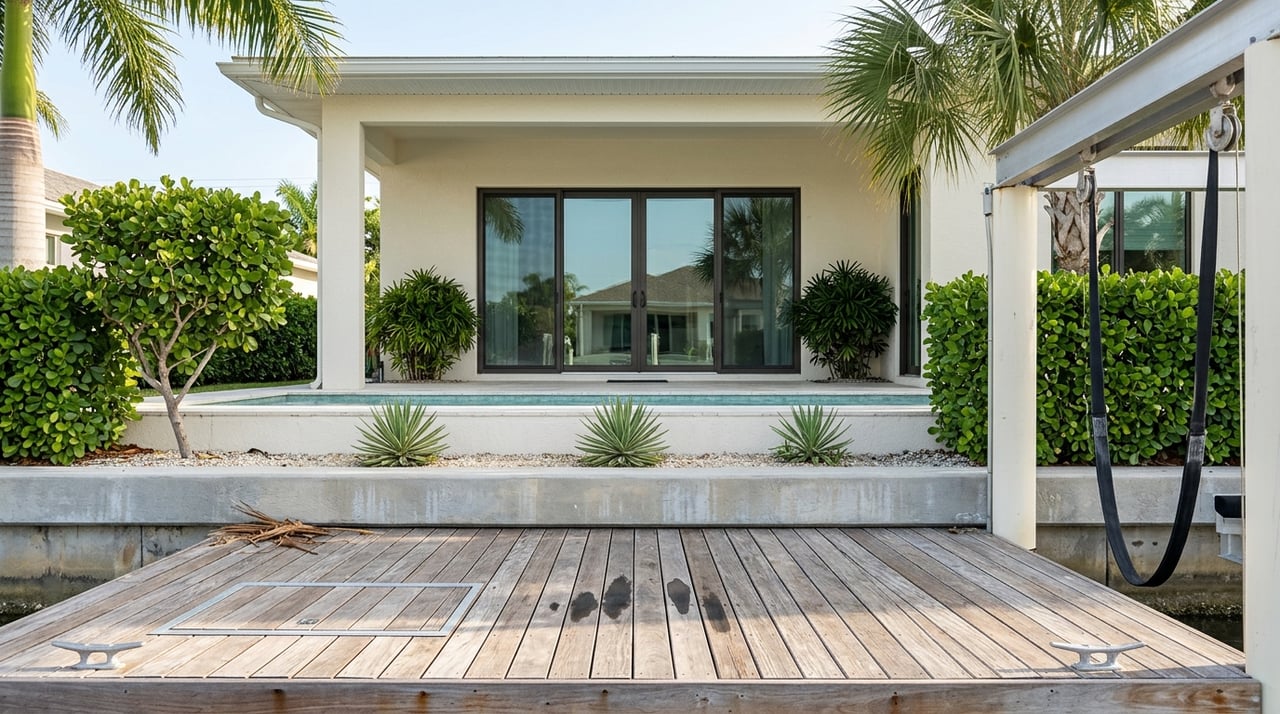
Buying a Conners Canal Home in Naples: What to Review
June 25, 2026
June 25, 2026
If you are drawn to waterfront living in North Naples, Conners can look like a simple yes on paper. Canal frontage, private docks, and quick boating appeal make it easy to focus on the lifestyle first. But before you buy in Conners, it helps to slow down and look closely at the details that can change your costs, your boating experience, and your renovation options. Let’s dive in.
Conners is commonly treated in listing data as a waterfront subdivision within the Vanderbilt Beach area of North Naples. Public listings identify single-family homes with canal frontage, but the neighborhood is not a one-size-fits-all waterfront community.
You may find original homes, renovated properties, and new construction on the same street. Public listing examples show homes built in 1971, 1987, and 2023, which means age, condition, and compliance can vary significantly from one parcel to the next.
That matters because features such as seawalls, docks, boat lifts, roofs, and flood-elevation compliance may be very different even when two homes look similar online. In Conners, the parcel itself often matters just as much as the neighborhood name.
Buying in Conners usually means buying more than a house. You are often also evaluating the marine setup, water access, and the condition of structures that can be expensive to repair or replace.
Sample listings in Conners show a wide range of waterfront features, including private docks, boat lifts, dock water and electricity, wooden docks, hoists or davits, and even boathouse or captain’s-walk style structures. Some listings also reference canal widths in the 81-to-120-foot range.
That variation is important because there is no standard Conners dock package. One parcel may be well suited for your boating plans, while another may require updates, permitting, or operational compromises.
The canal frontage should be reviewed as a property-specific feature, not a neighborhood assumption. Canal width, turning room, and dock placement can all affect how comfortably you can use the property with your vessel.
If you plan to keep a boat, ask how the current owner uses the dock and what size vessel the setup supports. A newer seawall or lift can be a plus, but only if it matches your needs and has the proper permit history.
In Conners, the age of the home does not always match the age of the marine improvements. A renovated house may still have an older seawall, while a new construction property may include a newly built seawall and updated lifts.
Before you make an offer, ask for records on the seawall, dock, lift, and any major repairs or replacements. This is one of the clearest ways to understand whether you are buying a lifestyle-ready property or a future project.
One of the biggest buyer mistakes in canal communities is assuming every property offers the same boating route. In Conners, public marketing descriptions are not fully consistent on that point.
One listing says Gulf access is available under one bridge with about 20 feet of clearance via Wiggins Pass. Another marketing source describes the neighborhood as having no-bridge Gulf access.
That discrepancy tells you exactly what to do next: verify the route for the specific parcel you want. You should confirm the bridge count, bridge clearance, route depth, and your vessel’s air draft using NOAA charting as the official navigation reference.
Wiggins Pass is also not static. The Florida Department of Environmental Protection maintains an inlet management plan for the pass and notes that the plan is updated to reflect current statutes and observed erosion conditions.
For you as a buyer, that means access conditions, sedimentation, and navigation constraints can shift over time. If boating is a major reason for your purchase, current chart review and local marine guidance should be part of your due diligence.
Conners is often viewed as more lightly governed than many other Naples waterfront communities. Public listings commonly show no HOA or no HOA-related fees, but that does not mean there are no neighborhood-level obligations.
Collier County’s Vanderbilt Beach Beautification MSTU is an active county-created special taxing district established to fund local improvements. Its stated purposes include medians, street lighting, sidewalks, irrigation, plantings, traffic-calming improvements, and burial of power lines.
So when you compare Conners with other waterfront options, separate these three categories clearly:
This distinction matters because a property can have no traditional HOA and still carry other obligations that affect your ownership costs or future plans.
Flood risk is a core issue for any waterfront purchase in Conners. Collier County adopted a new coastal flood map effective February 8, 2024, replacing the older 2012 maps, and the county states that the updated flood hazard data represents the best information available.
Before writing an offer, confirm the parcel’s flood zone, base flood elevation, and whether a current elevation certificate exists. These items can influence insurance, lender review, future renovations, and your overall carrying costs.
Collier County also notes that a valid elevation certificate is required to support a Letter of Map Change request. The county’s floodplain guidance references supporting documents such as the property deed, tax assessor’s map, subdivision plat map, and FEMA FIRM or FIRMette.
For buyers, those same documents are also useful during underwriting and title review because they help define lot boundaries, building footprint questions, and map-based elevation issues.
In a waterfront neighborhood like Conners, permit history should be part of your pre-offer review, not an afterthought. Collier County states that permit information is publicly searchable, which gives buyers a practical way to review work completed on the home and its marine features.
You should ask for permit history on the house, seawall, dock, boat lift, and any exterior additions. Open permits, missing final inspections, or undocumented improvements can change the value of the property and your post-closing responsibilities.
Collier County’s marine permit application requires a sealed site plan showing the location of the dock, seawall, or boat lift. The plan must include canal width and measurements of protrusions from the most restrictive reference point.
The county also states that, in most cases, permits from the U.S. Army Corps of Engineers and the Florida Department of Environmental Protection are required before the county issues permits for seawalls, rip rap, and boat docks. If you plan to renovate or rebuild after closing, this can affect timing, cost, and feasibility.
If work is needed, licensed professionals matter. Collier County says anyone engaging in construction contracting business, or representing themselves as such, must hold the proper county license, certificate of competency, or state certification.
That makes it especially important to vet marine contractors, dock builders, seawall contractors, and surveyors early in the process. On a canal-front purchase, the right professionals can help you identify risk before it becomes your problem.
A strong offer in Conners starts with strong information. Because parcel-to-parcel variation is so meaningful here, your document review should be thorough from the start.
A practical pre-offer document set should include:
This checklist can help you compare properties more accurately and reduce surprises late in the contract period.
In Conners, the right questions can save you time, money, and frustration. Because boating access and waterfront improvements vary so much by parcel, broad assumptions are not enough.
Ask these questions before you move forward:
These are not small details in a neighborhood like Conners. They are often central to whether a property truly fits your goals.
If you plan to do work after closing, sequence matters. The safest path is to verify the survey first, then confirm flood zone and permitting constraints, then bring in a marine inspector or seawall specialist, and only then finalize contractor bids.
That order lines up with how Collier County and other agencies regulate waterfront improvements. It also helps reduce the risk of discovering a setback issue, permit problem, or flood-elevation concern after you are already deep into the transaction.
Conners offers a compelling waterfront lifestyle in North Naples, but it rewards buyers who look beyond the listing photos. The boating setup, flood details, permit history, and district-level costs can all vary in ways that materially affect your ownership experience.
When you approach the purchase with property-specific due diligence, you give yourself a much clearer picture of what you are buying. If you want expert guidance on evaluating canal-front homes in Conners and navigating the details with confidence, schedule a private concierge consultation with Gulf Coast Luxury Group.
August 6, 2026
July 23, 2026
July 16, 2026
July 9, 2026
July 2, 2026
June 25, 2026
June 18, 2026
June 11, 2026
June 4, 2026
Your journey is not just about transactions; it’s about securing your future and protecting your interests, and we’re here to make that happen. Contact us today!