How to Sell a Port Royal Estate With More Privacy
June 11, 2026
June 11, 2026
Wondering how to sell a Port Royal estate without putting every detail of your home in front of the public? In a neighborhood known for rare waterfront properties, private club affiliation, and a highly curated coastal lifestyle, that concern is understandable. If you want to protect your privacy while still reaching qualified buyers, a discreet strategy can help you balance exposure, control, and results. Let’s dive in.
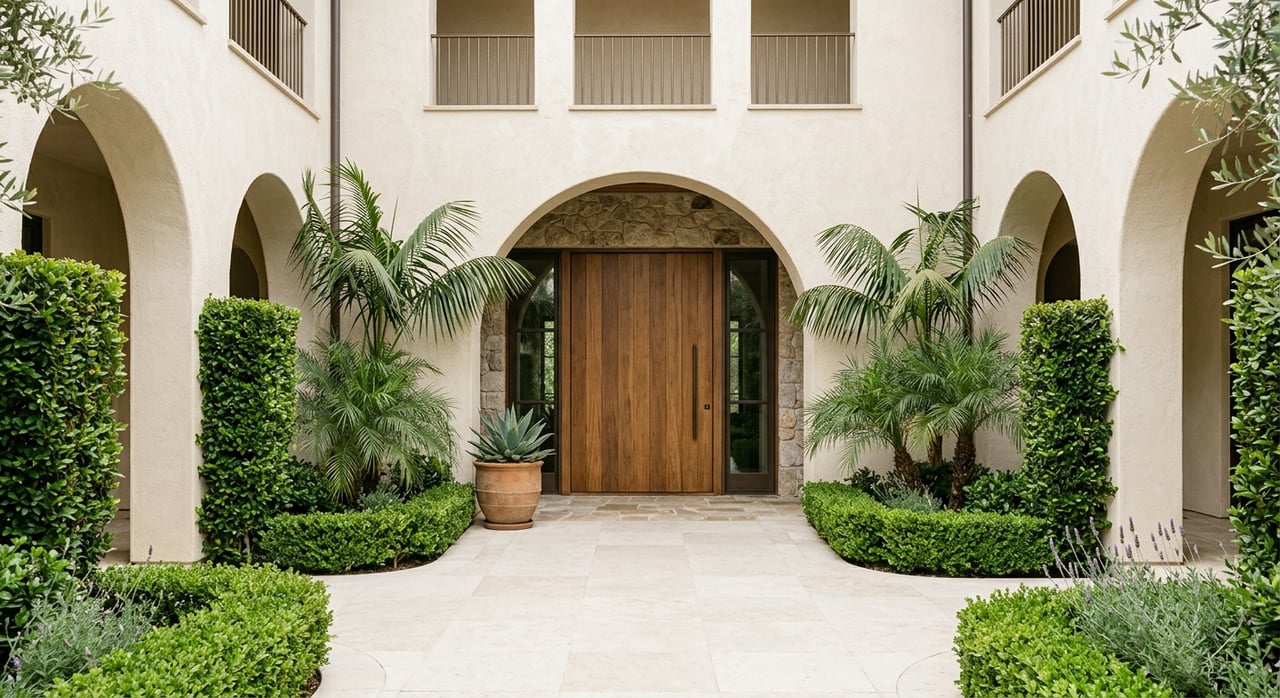
Port Royal is not a typical neighborhood. It is a small Naples enclave of roughly 500 estates, bounded by Gordon Pass, Naples Bay, the Gulf of Mexico, and Aqualane Shores. That level of scarcity alone changes how many sellers think about marketing.
In Port Royal, your home is often presented as more than real estate. It may also represent a waterfront lifestyle tied to private amenities, including the Port Royal Club, where membership is affiliated with ownership of eligible property. For many sellers, that makes discretion part of the value proposition, not just a personal preference.
A broad public launch is not always the best first move for a signature property. In this setting, the goal is often to connect with the right buyers through a controlled process that protects your time, privacy, and negotiating position.
Even in the luxury segment, great homes still need a smart plan. Recent NABOR reporting showed 1,906 new listings and 2,053 price decreases in January 2026, while pending sales in March 2026 rose 15% year over year and closed sales rose 26.7% year over year. NABOR also reported 8.3 months of inventory heading into 2026.
That combination points to an active but more balanced market. Buyers are still purchasing, and Port Royal has continued to produce headline-making sales, including two record-breaking transactions highlighted in April 2025. At the same time, exceptional properties still benefit from disciplined pricing, polished presentation, and careful positioning.
For you as a seller, that matters. A discreet campaign should not mean a casual campaign. It should mean a highly intentional one.
Private marketing has to be structured carefully. Under current Clear Cooperation rules, a listing broker must submit a property to the MLS within one business day of public marketing.
Public marketing is defined broadly and can include yard signs, public websites, public apps, flyers in windows, IDX or VOW displays, email blasts, and multi-brokerage sharing networks. That means a seller cannot assume a listing is private simply because it is not on a major portal.
Current policy also provides paths for sellers who want more control. These include office exclusive listings, which are filed with the MLS but not publicly disseminated, and delayed marketing exempt listings, which allow public marketing through IDX and syndication to be postponed for a period permitted by the local MLS.
There is also an important difference between one-to-one communication and broad distribution. One-to-one broker-to-broker communication does not trigger Clear Cooperation, while wider multi-brokerage communication can. In practice, the exact structure depends on local MLS rules and brokerage policy.
A successful private campaign usually feels polished from day one, even if public exposure is limited at first. The strategy is less about hiding the property and more about controlling who sees it, when they see it, and how it is presented.
A staged rollout may include:
This kind of sequencing gives you options. You can start with privacy and precision, then adjust if market response suggests a wider launch will improve your result.
Discreet marketing does not remove the need for market alignment. In fact, when exposure is more selective, pricing becomes even more important because the early audience is smaller and often highly informed.
In the current Naples market, where price reductions have been notable, overpricing can quietly work against a seller. A Port Royal estate may be rare, but buyers still compare waterfront location, lot characteristics, home condition, design, and timing. The strongest outcomes usually come from pairing exclusivity with realistic positioning.
A confidential sale is still a real estate sale. Under Florida Statute 475.278, licensees must disclose all known facts that materially affect the value of residential real property and are not readily observable. The same statute also requires brokerage relationship disclosures before the listing agreement or, if earlier, before a showing.
Florida law also protects certain confidential negotiating details. Without consent, a transaction broker cannot reveal a seller’s willingness to accept less than the asking price, a buyer’s willingness to pay more than offered, or other confidential terms covered by the statute.
For waterfront property in Port Royal, flood disclosure is a key part of the process. Under Florida Statute 689.302, the seller must complete and provide the required flood disclosure to the purchaser at or before contract execution.
The form asks whether the seller knows of flood damage during ownership, has filed flood-related insurance claims, or has received flood assistance. It also reminds buyers that homeowners insurance does not cover flood damage. In a coastal neighborhood, this is not a minor detail. It is an essential part of a well-managed transaction.
Discreet marketing must still follow fair housing law. HUD states that the Fair Housing Act applies to private housing and prohibits discrimination based on race, color, national origin, religion, sex, familial status, or disability.
That means a limited-access campaign cannot be used to screen buyers on a protected-class basis. You can control marketing exposure, protect your privacy, and manage showings carefully, but the process still needs to be handled lawfully and consistently.
A Port Royal estate sale often involves more moving parts than a standard residential transaction. The marketing path, MLS status, relationship disclosures, flood paperwork, inspections, repair negotiations, title review, survey matters, and closing terms all need to stay aligned.
That is where process matters as much as presentation. A discreet strategy works best when it is treated as a coordinated system, not a loose collection of private showings and quiet conversations.
In a neighborhood like Port Royal, presentation and process should support each other. You want property materials that feel elevated, outreach that feels intentional, and transaction management that keeps momentum strong without compromising confidentiality.
That is especially important when a sale involves waterfront considerations, nuanced negotiations, or custom contract terms. Having an organized, responsive team can make the experience feel more controlled from listing through closing.
For many luxury sellers, legal and transactional clarity is part of the marketing strategy. When details are handled cleanly and promptly, buyers have more confidence, and that can help keep a private sale on track.
A private-first strategy may be worth considering if you want to:
It may be less effective if your pricing, presentation, or timing would benefit from immediate broad-market reach. The right approach depends on your goals, your property, and how the current Port Royal and Naples markets are behaving when you list.
If you are considering a discreet sale in Port Royal, the best first step is a strategy conversation. With the right plan, you can protect privacy, meet disclosure obligations, and position your estate in a way that feels both polished and purposeful. To explore a tailored approach, schedule a private consultation with Gulf Coast Luxury Group.
October 15, 2026

October 8, 2026
October 1, 2026
September 24, 2026
September 17, 2026
September 10, 2026
September 3, 2026

August 27, 2026
August 20, 2026
Your journey is not just about transactions; it’s about securing your future and protecting your interests, and we’re here to make that happen. Contact us today!