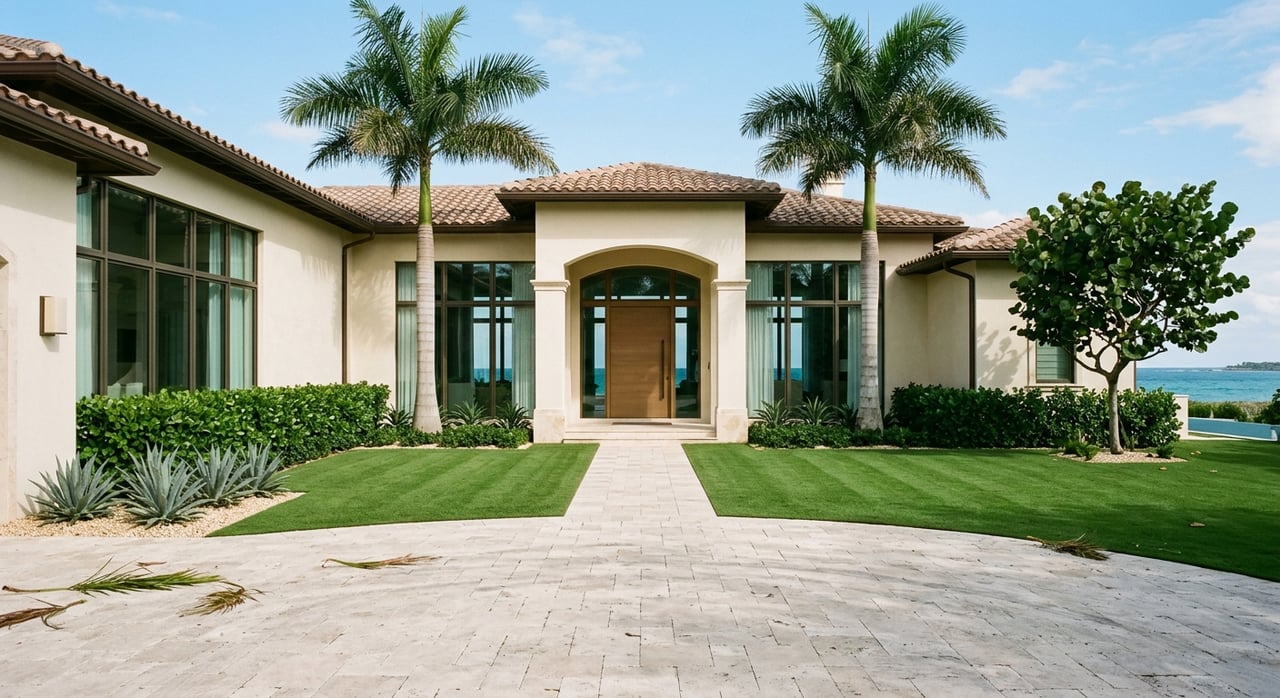
Port Royal Lot Values and Luxury Buying Opportunities
June 4, 2026
June 4, 2026
Wondering why one Port Royal property commands a very different price than another, even when both sit on prime waterfront? In this market, the answer often starts with the land, not just the house. If you are buying, selling, or evaluating a long-term hold in Port Royal, understanding lot value can help you make sharper decisions with fewer surprises. Let’s dive in.
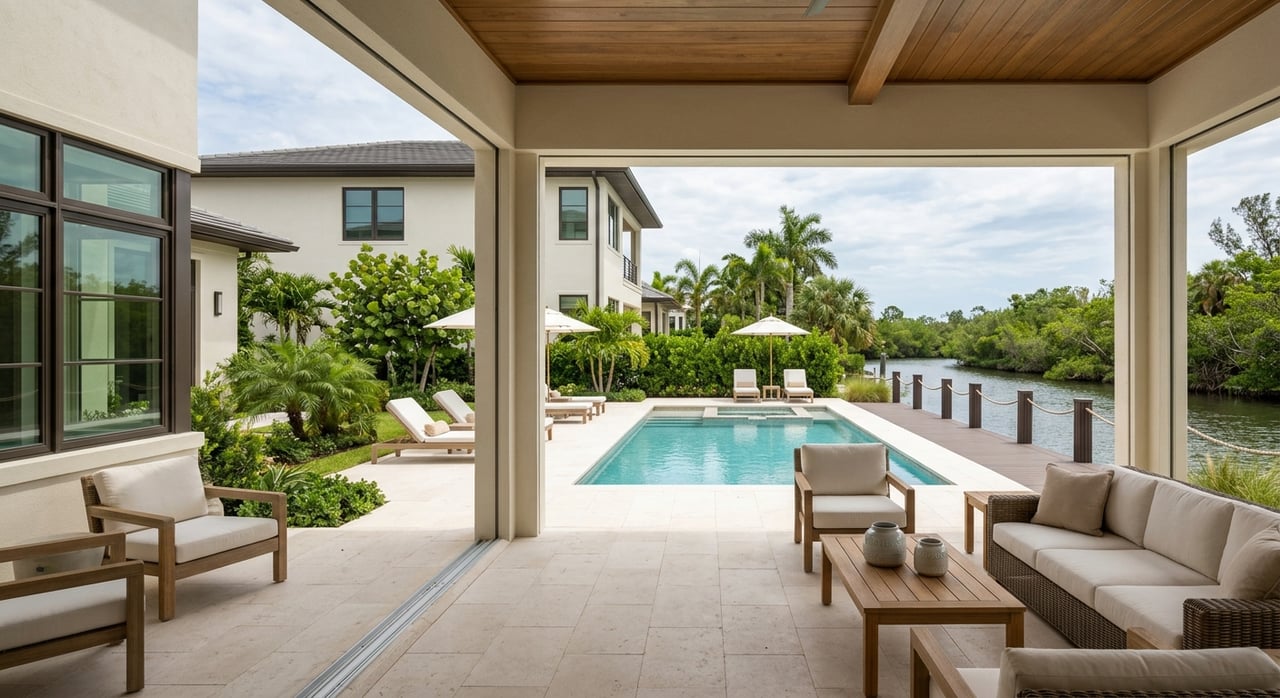
Port Royal was designed around direct waterfront living at the southern tip of Naples, with residences positioned for access to either the Gulf of Mexico or Naples Bay. That original layout still shapes value today because waterfront access is one of the neighborhood’s defining features. In practical terms, buyers are often paying for the parcel’s position, water exposure, and future possibilities as much as for the residence itself.
Ownership in Port Royal can also carry added value because Port Royal Club membership is affiliated with ownership of property in the neighborhood. That does not mean every parcel is interchangeable, but it does reinforce how closely property ownership and lifestyle access are tied together here. In a market like this, the lot can become the real story.
Current pricing supports that view. As of April 2026, Port Royal showed a median listing price of $27.9 million, with about 40 homes for sale and a median 70 days on market. NABOR also noted that a pair of Port Royal transactions, including an $85 million home sale and a $225 million three-parcel purchase, were large enough to distort broader Collier County averages.
In Port Royal, not all waterfront is valued the same way. Gulf-front and bayfront parcels often draw special attention because they offer a different scale of exposure, views, and prestige than more typical waterfront configurations. The type of water your lot touches can be one of the first factors shaping both pricing and buyer demand.
A recent benchmark sale helps illustrate the point. A Gulf-front three-parcel assemblage on Gordon Drive sold for $225 million and was reported at about 15 acres with roughly 800 feet of Gulf frontage. That kind of scale is rare, and it shows how strongly exceptional water exposure can influence value.
Frontage matters because it affects openness, privacy, view span, and estate presence. In simple terms, more linear feet on the water can create a very different ownership experience. It can also support a more substantial estate footprint, depending on the parcel and approvals.
Another high-profile sale offers a useful comparison. A Port Royal bayfront estate sold for $85 million and sat on 2¼ lots with 250 feet of Naples Bay frontage. Even without reducing value to a single formula, these examples make clear that frontage length is a major part of the luxury pricing equation.
Port Royal’s zoning standards also give lot dimensions real importance. In the R1-15A district, the minimum lot area is 15,000 square feet and the minimum lot width is 100 feet. Those baseline requirements help shape what can be built and how a parcel may be improved over time.
There is also an important nuance in the code. Platted lots may be reestablished even if they no longer meet width minimums after prior combinations. For buyers and investors, that can create hidden upside in adjacent parcels that may be recombined, replatted, or repositioned into a larger estate footprint.
Some value drivers are harder to measure, but they still matter. Orientation, sunset exposure, and the breadth of open water views can all influence how a parcel feels day to day. In a market at this level, those details are rarely minor.
Port Royal’s association limits waterfront plantings in part to preserve waterway views. That means sightlines are protected by design rather than left entirely to chance. Lots with broader, less obstructed views and stronger visual connection to the water will usually stand apart from otherwise similar parcels.
Port Royal offers strong long-term appeal, but it is not a simple buy-and-build environment. The association requires written approval for homes, structures, alterations, walls, fences, docks, and even exterior colors. Its materials also state that plans requiring city permits must be approved by Port Royal before the permit is issued.
That review process helps preserve consistency and estate character, which supports long-term desirability. At the same time, it adds time, planning, and execution risk for a buyer considering major work. That friction becomes part of the lot’s real economic value.
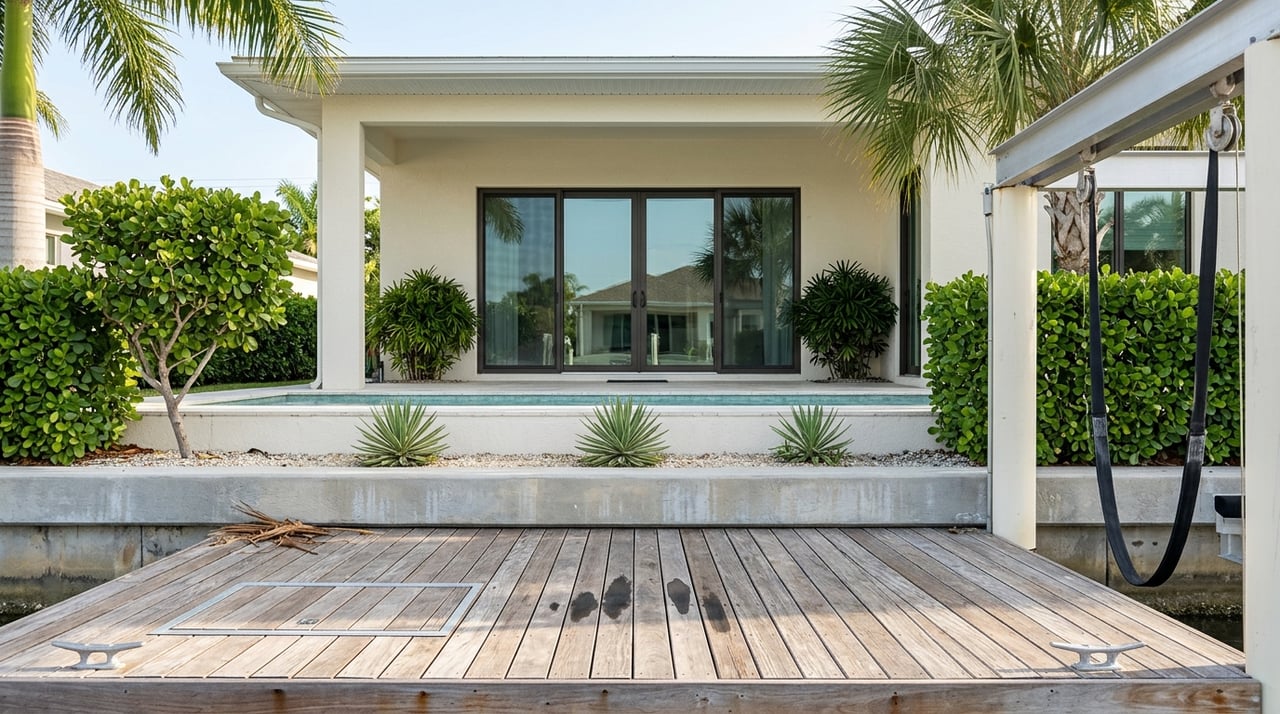
On waterfront parcels, improvement potential depends on more than location alone. Port Royal reviews dock and shoreline plans before city submission, and the City of Naples code summary adds dimensional limits. Piers and lifts are subject to a 20-foot side-yard setback and a 25-foot waterward limit from the toe of the revetment, with exceptions in certain waterfront situations.
The association’s dock review packet also requires scaled surveys, approval, and post-construction as-built documentation. For a buyer who wants boating functionality, these details matter early. A parcel with strong water frontage is only as useful as its practical dock feasibility and approval path.
Flood compliance is another reason Port Royal buyers must separate land value from structure value. The City of Naples says its 2024 Flood Insurance Rate Maps are in effect, and structures in a Special Flood Hazard Area may face compliance requirements if substantial damage or substantial improvement is triggered. In some cases, that can mean elevation to or above base flood elevation.
Naples also applies the substantial damage and substantial improvement test using the assessed value of the structure only, excluding land and pool or spa. That distinction is critical in Port Royal, where older improvements may sit on highly valuable land. A property that looks like a renovation candidate at first glance may end up making more sense as a rebuild.
If you want a home you can enjoy right away, the strongest opportunities may be properties where the existing residence already fits the lot well and avoids major compliance triggers. In that case, you are not just paying for finishes or architecture. You are paying for immediacy, usability, and a parcel that already performs near the top of its entitlement potential.
This can be especially attractive in a market where approvals and redevelopment timelines add complexity. A well-positioned existing home on exceptional waterfront may justify a premium simply because it reduces friction. In Port Royal, convenience can be part of luxury.
If your goal is to create a custom estate, the best opportunities tend to be parcels with rare frontage, strong orientation, and enough scale to justify the time and cost involved. Recent top-of-market sales suggest that in some cases the land is worth more than the structure sitting on it. That is why teardown or major redevelopment decisions must start with the lot, not the house.
This is where disciplined due diligence matters most. Flood zone position, elevation exposure, dock feasibility, and approval timing can all influence whether a redevelopment plan is realistic. In Port Royal, the right parcel can support extraordinary long-term value, but only if the execution path makes sense.
Some buyers are not chasing immediate use or quick redevelopment. They are focused on scarcity and patient appreciation. Port Royal’s limited inventory, protected view corridors, and continued neighborhood investment can make that strategy compelling for the right owner.
The Port Royal Club is currently being rebuilt, with temporary dining operations approved through June 1, 2027 or until the rebuilt club opens, whichever comes first. That kind of ongoing reinvestment supports the neighborhood’s long-term appeal. For a patient owner, the investment thesis may center on irreplaceable waterfront land rather than on an older home’s improvement cycle.
Before you act, focus on the factors that most directly shape value and risk:
A disciplined review helps you compare opportunities more accurately. It can also keep you from overpaying for a house when the land is average, or overlooking a parcel whose true value lies in its future potential.
Port Royal is one of those rare markets where broad luxury trends do not tell the whole story. A single sale can skew countywide numbers, and two properties with similar asking prices may offer very different land value, approval complexity, and redevelopment upside. That is why neighborhood-specific analysis matters here.
When you are weighing a Port Royal purchase or preparing a property for sale, you need more than surface-level comps. You need a clear read on land economics, local code, approval friction, and how a parcel fits current buyer demand. That kind of guidance can make the process feel far more manageable.
If you are thinking about buying or selling in Port Royal, Gulf Coast Luxury Group offers concierge-level guidance backed by deep neighborhood knowledge, premium marketing, and in-house legal insight to help you move with confidence.
July 16, 2026
July 9, 2026
July 2, 2026
June 25, 2026
June 18, 2026
June 11, 2026
June 4, 2026
May 28, 2026
May 21, 2026
Your journey is not just about transactions; it’s about securing your future and protecting your interests, and we’re here to make that happen. Contact us today!